 In Indian society, mental health isn’t treated as a spectrum; it is treated as a verdict. We live in a culture of dangerous extremes where you are allowed to be only one of two things: perfectly functional or clinically insane (mad).
But what about the millions who live in the grey area?
Anshul Dubey realized that this invisible gap is where the real tragedy lies. In our homes and offices, there is no room for “struggling.”
If a person lashes out in anger, we label them toxic and hate them immediately, never pausing to ask what pain is fueling that rage.
If a person is consumed by sadness, we burden them with the expectation to “just be positive,” as if happiness is a switch they are refusing to flip.
This binary thinking forces people to wear masks. It creates a suffocating pressure where you must hide your anxiety to avoid being labelled “weak” or “crazy.”
The Vision: Breaking the Walls of Jargon
Anshul saw that the solution wasn’t just in clinics; it was in communication. He realized that psychology has been locked away behind heavy medical textbooks and intimidating English jargon that the common Indian finds disconnected from their reality.
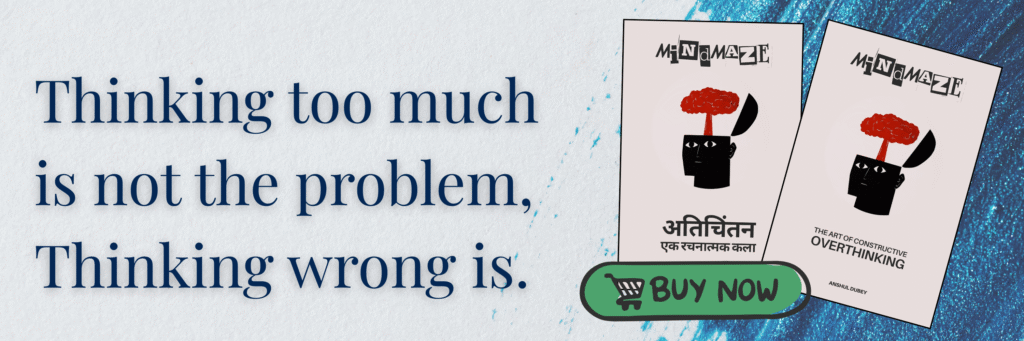
He took it upon himself to democratize mental peace. Through his book, “The Art of Constructive Overthinking,”Anshul began the mission of translating complex psychological concepts into the language of the common man. He stripped away the fear and replaced it with understanding.
Enter Parallect. Parallect is not just an app; it is the answer to that silence. It is an attempt to build a space where you don’t have to be “perfect.” Through his blogs, videos, and this platform, Anshul is building a world where mental health is discussed over tea, not just in whispers.
We are here to be your buddy when the world demands you to be a robot. We are here to tell you that you exist, your pain is valid, and you don’t have to choose between being “fine” or “insane.” You can just be human.