
वह भाषा चुनें जिसमें आप सहज हों।
The Miracle in Your Words: Unlocking the Untapped Power of Appreciation
We live in a world of constant feedback. Managers review performance, teachers correct homework with red pens, and we scroll through social media, silently judging. We’re experts at pointing out what’s wrong.
But what if we’re ignoring a superpower?
What if a few simple, honest words could transform our daily lives, sweeten our relationships, and make our most ambitious goals achievable? That superpower exists, and it’s called appreciation.
Dale Carnegie, in his timeless book How to Win Friends and Influence People, relentlessly emphasized its importance. Psychologists have proven its effectiveness. Yet, in our homes, schools, and offices, we still rely more on criticism and punishment than on praise.
This isn’t just a “feel-good” idea. It’s a fundamental, underutilized tool for a better life. Let’s explore the miracle of appreciation, the science of why it works, and the surprising reasons we hold back from using it.
The Science of a Simple

When you give or receive sincere appreciation, it isn’t just a social nicety; it’s a biological event.
From a psychological perspective, appreciation is a form of positive reinforcement. B.F. Skinner’s research showed that when a behavior is followed by a rewarding stimulus (like praise), that behavior is more likely to be repeated. Your brain releases dopamine, the “feel-good” neurotransmitter, creating a powerful link between the action and the positive feeling. It’s the brain’s way of saying, “Do that again!”
Philosophers have understood this for centuries. Thinkers like Hegel spoke of the fundamental human need for recognition. We don’t just want to exist; we want to be seen and valued for who we are and what we do. Appreciation tells someone, “I see you. You matter.”
How to Use Appreciation: From Toddlers to the Boardroom
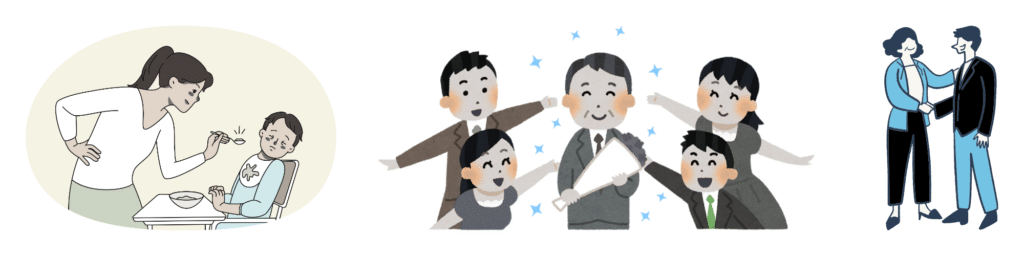
The power of appreciation is universal, but its application changes with context. Scientific studies have revealed a fascinating nuance: how you praise is just as important as that you praise.
The key lies in praising the process, not the person.
A groundbreaking study by Gunderson et al. (2013) found that toddlers who were praised for their effort and hard work (“process praise” like, “You worked so hard on that puzzle!”) were more likely to develop a growth mindset five years later. They believed their abilities could be developed through dedication and hard work.
Conversely, children praised for their innate ability (“person praise” like, “You’re so smart!”) were more likely to develop a fixed mindset. They became afraid of challenges because failure might prove they weren’t so smart after all.
This applies everywhere:
In parenting: Instead of “You’re a good girl,” try “I really appreciate how you helped your brother.”
In the workplace: Instead of “You’re a star employee,” try “The effort you put into researching that report was incredible and it really shows.”
This is what Dale Carnegie meant by “honest and sincere appreciation.” It’s specific, it’s genuine, and it recognizes the work behind the success.
If It’s a Miracle, Why Don’t We Use It?
This is the big question. If praise is so effective, why do punishment-based systems persist? The answer lies in a combination of our brains, our systems, and our fears.
The Brain’s Glitch: Negativity Bias Evolution has wired our brains with a Negativity Bias. For survival, it was more important to notice the one tiger in the bushes than the ten beautiful flowers. This bias makes us naturally zoom in on mistakes, errors, and problems. A manager sees the one typo in a 20-page report before the brilliant analysis. It’s an unconscious default setting.
The System’s Stubbornness: Systemic Inertia Our institutions—schools, corporations, governments—were built in an era of top-down authority. They are designed to be stable and resistant to change. This systemic inertia means that even if a teacher or manager wants to create a positive, appreciation-focused environment, they are often working against a century-old structure of rules, hierarchies, and “the way things have always been done.”
The Fear Factor: Flattery vs. Weakness Many people hold back praise for two reasons:
Fear of Insincerity: They worry their praise will sound like cheap flattery. The line is simple: flattery is insincere and often has an ulterior motive. Genuine appreciation is specific and has no other goal than to recognize another person’s value.
Fear of Being “Soft”: Some cultures and management styles mistakenly view praise as a sign of weakness, believing that constant criticism is what drives improvement.
How to Start the Miracle: Your 3-Step Guide to Effective Appreciation
Changing your default setting from criticism to appreciation takes conscious effort, but it’s a skill anyone can learn.
Be Specific and Sincere: Forget vague compliments. “Good job” is okay, but “I was so impressed with how you handled that difficult client call with patience and professionalism” is powerful. Your brain knows the difference, and neuroscience confirms that sincere praise activates reward centers in the brain far more effectively than flattery.
Praise the Effort, Not Just the Talent: Acknowledge the hard work, the persistence, the strategy, and the courage. This builds resilience and a growth mindset in others.
Make it Timely and Unconditional: Offer appreciation as soon as you see something praiseworthy. And importantly, don’t follow it with a “but.” Don’t say, “That was a great presentation, but you need to fix slide three.” Let the appreciation stand on its own.
The Choice Is Yours
Appreciation is not a complex strategy. It’s a simple, profound choice to focus on what’s right instead of what’s wrong. It is the fuel for motivation, the glue for relationships, and the foundation for a more positive and successful life.
Our systems may be slow to change and our brains may be biased towards the negative, but we don’t have to be.
Start today. Find one person—a colleague, your partner, your child—and give them one piece of specific, sincere appreciation. Watch what happens. You have the power to perform a small miracle with your words. Why not use it?