
वह भाषा चुनें जिसमें आप सहज हों।
Childhood Worries and Their End
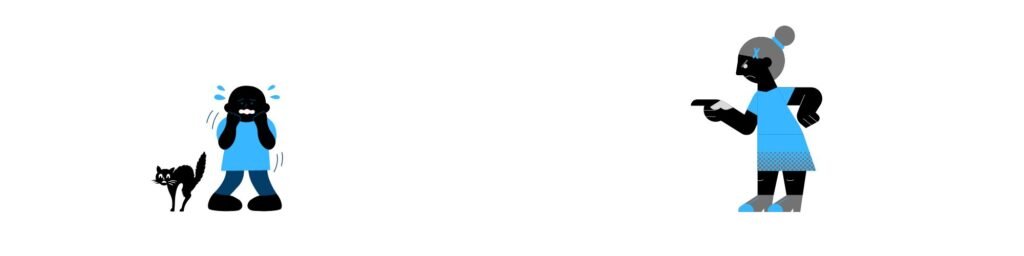
Remember those days when you forgot to complete your homework in school? As you lay in bed at night, the thought of the homework being checked the next day would creep in, even though the situation was already out of your control. From that very moment, a sense of fear and anxiety would settle in. You’d wake up the next morning with the same worry, get ready, and head to school, carrying that anxiety with you. You’d talk to your friends, sharing the same fear, and spend every period worrying about the last one, where the homework would be checked. And as the time got closer, the anxiety would grow stronger. Then, finally, the moment arrived—the period when the homework check was due. And one of these things would happen:
- The teacher might scold you or perhaps give you a punishment.
- The teacher might not show up that day.
- The teacher might forget to check the homework.
- The teacher might check the homework but not punish you, simply explaining your mistake.
- Or something else might happen altogether.
But no matter the outcome, one thing would always happen—the scene would come to an end. Whatever had been building up fear and anxiety for hours would only last a few minutes during execution.
Life’s Constant Worries
Life often mirrors these kinds of situations—events that haven’t yet occurred, but their mere possibility looms large. Our mind convinces us that there is a high probability of these things happening. The fear of these potential events and their possible consequences slowly eats away at us. We find ourselves constantly thinking about what might happen, imagining what will be going on when it happens, what we’ll be doing, how we’ll handle the situation, or what we can do now to prevent it from happening at all. We remain stuck in this loop until the event either happens or the possibility of it occurring completely vanishes. And just like the homework situation in school, the same thing happens—the outcome, whatever it may be, comes to pass, and the scene ends.
This has happened many times in life; in fact, it happens almost daily. Yet, we fail to understand that every situation, no matter how overwhelming, comes to an end. Whatever the result may be, the scene ends, and another takes its place. The next day brings with it a new source of anxiety, and once again, we spend our time worrying about it until it happens. What we forget is that, just like all the other worries, this too will only last for a few minutes before it fades away.
The Reality of Worry

The truth about life is that no event is as destructive in reality as it seems in our imagination. If you don’t believe it, just look back at the history of your own life. All the things you worried about for days, months, or even years—what actually happened with them?
It’s not that what you feared never happens. Sometimes, things unfold exactly as you imagined. But when they do, they never cause as much damage as you thought they would.
Worrying is tied to the future; it’s all about what might happen. The present is right in front of your eyes, and the future is uncertain. There’s no guarantee that what you’re imagining will come to pass. But we often base our worries on assumptions drawn from past experiences, convincing ourselves that a certain outcome is inevitable—and then we drown in anxiety over it.
It’s natural to feel anxious if you’re driving and see a speeding car coming at you from the wrong side, or if you’re walking down a path and an animal attacks you. These are real, present threats.
But if your anxiety is about a bill due in ten days and you currently don’t have the money to pay it, that’s a useless worry. That’s not part of your present. And you don’t know what will happen in those ten days—anything is possible.
Even if you can’t pay the bill, the consequences might not be as catastrophic as you’re imagining. When it comes to anxiety, we tend to look at situations through a magnifying glass, making them appear much bigger than they really are. We forget that similar challenges have occurred before, yet the outcome was never as disastrous as we feared.
Murphy’s Law and Worrying
You may have heard of Murphy’s Law, which suggests that the more we fear something happening, the more likely it is to happen. At first glance, this might seem irrelevant. How could our fear possibly increase the chances of an event occurring?
Let’s take the example of the bill due in ten days. When we don’t have the money to pay it, and we spend all our time worrying about the impending deadline, our mind becomes clouded. We lose the ability to think clearly and creatively about potential solutions. Instead of taking actions that could help us secure the money, we spend those ten days solely in a state of anxiety, watching the dreaded event get closer without doing anything productive.
It’s no secret that a calm and worry-free mind thinks far more effectively than one consumed by stress. In this state of agitation, we also lose our ability to see reality clearly. We may even end up taking irrational steps that make the situation worse. For example, in our case, someone might gamble away their limited money in a desperate attempt to increase it, only to lose it all.
Now, not only can’t you pay the bill due in ten days, but you also have no money for tomorrow.
The key to not letting future worries ruin your present is simple: avoid stressing over things that aren’t happening right now.
Anxiety: A Natural Process
Anxiety is a natural response. No one chooses to feel anxious; it simply happens. However, controlling it is within our power.
We must realize that every worry about a future event that isn’t currently happening in front of us is pointless and often false. There are two key reasons for this:
The Outcome Isn’t Certain: Things can change. At the end of every decision, there is a person just like us—equally human, equally thoughtful, and equally capable of perceiving the situation. Their decisions, to a large extent, depend on their mood and circumstances at the time. So, we don’t know what exactly will happen. Until the event occurs, countless factors could prevent it from happening, including our own actions. But this is only possible if we aren’t paralyzed by worry.
Even If It Happens: Let’s assume that the event you fear does happen. What then? The situation will play out for a while and then come to an end—maybe in minutes, maybe in days, or in rare cases, months. But it will end. We will be anxious when the event happens, and we will remain anxious until it does. The time spent worrying before the event is wasted, and eliminating that period of unnecessary stress is entirely within our control. In most cases, when we don’t let worry take over, we find solutions before the event even occurs.
This is what some people refer to as the “Law of Attraction.”
So, my only suggestion is simple: Don’t worry about what isn’t happening in front of you, at least not until it starts unfolding.
This doesn’t mean ignoring potential problems, but rather differentiating between worrying and problem-solving. When we focus on solutions, we think just like scientists devising a plan to prevent a meteor from colliding with Earth. We prepare not because a collision is inevitable, but because there is a possibility we can prevent it.